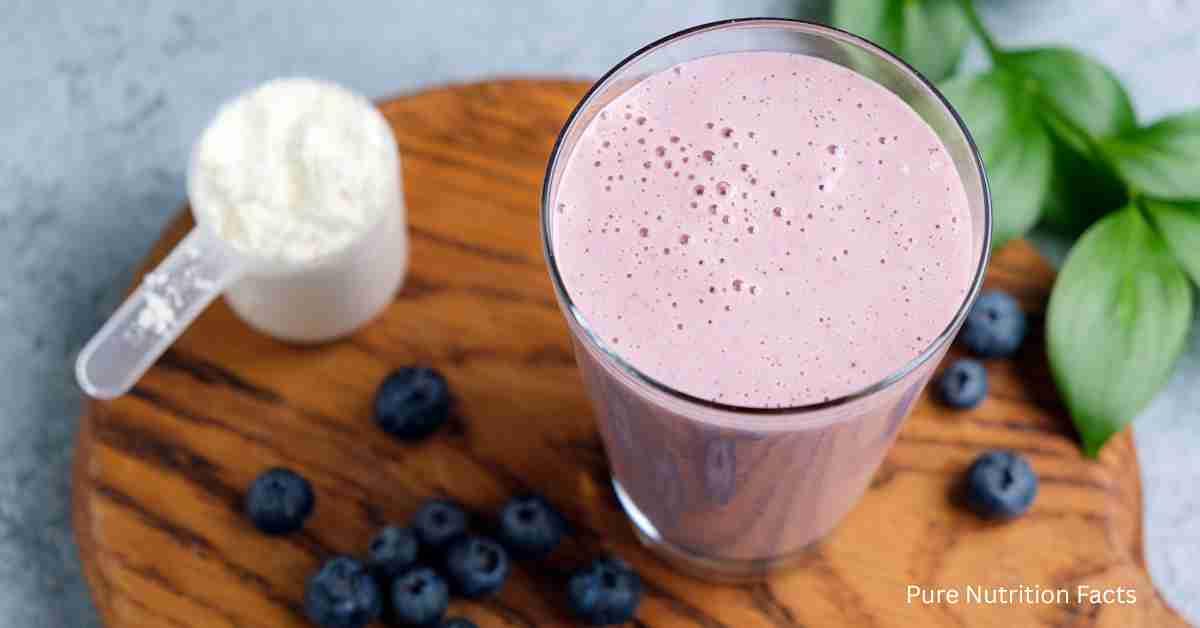
Short answer: For a high-protein smoothie without protein powder, blend 1 cup of milk, ½ cup of plain Greek yogurt, 1 tablespoon of peanut butter, a frozen banana and ½ cup of strawberries. It takes 5 minutes and has about 432 calories and 28 grams of protein. Add a scoop of whey or plant protein powder to bring it to about 53 grams, enough for a post-workout meal.
Most fruit smoothies taste great but leave you hungry an hour later, because they’re mostly sugar from fruit and juice. This one is built around protein-rich dairy, so it’s thick, creamy and genuinely filling, and it works as a quick breakfast or a recovery drink after the gym. You don’t need protein powder to make it high in protein, but it’s easy to add if you want more.
To find out how much protein you need each day, try our protein calculator. For powders, see whey vs plant protein and how to choose a protein powder.
High-protein smoothie at a glance
- Servings
- 1 large smoothie (about 2½ cups)
- Time
- 5 minutes
- Protein
- About 28 g without powder; about 53 g with a scoop
- Calories
- About 432 without powder; about 545 with
- Calcium
- About 474 mg (36% DV)
- Diet
- Vegetarian, gluten-free; see swaps for dairy-free
Why this recipe works
- Protein from whole foods: milk and Greek yogurt together supply over 20 grams of protein, plus calcium and potassium.
- Frozen banana instead of ice: it makes the smoothie thick and creamy and adds natural sweetness, so you don’t need sugar or honey.
- A little fat: peanut butter adds protein, flavor and fat, which helps keep you full for longer.
- Liquid first: adding milk to the blender before the frozen fruit helps the blades move and gives a smoother result.
Where the protein comes from
| Ingredient | Protein |
|---|---|
| Plain nonfat Greek yogurt, ½ cup (140 g) | 14.3 g |
| 2% milk, 1 cup | 8.1 g |
| Peanut butter, 1 tbsp | 3.6 g |
| Banana and strawberries | 1.8 g |
| Total without powder | 27.8 g |
| Optional: 1 scoop whey protein (30–32 g) | About 25 g |
Calculated from USDA FoodData Central: Greek yogurt, plain, nonfat (FDC 330137); 2% milk (171267); peanut butter, smooth (172470); banana (173944); strawberries (167762); protein powder, whey based (173180).
Research suggests that about 20 to 40 grams of protein at a meal is enough to maximize muscle building for most people after a workout, so the basic smoothie already reaches the target. Adding powder is useful if you have higher needs, a larger body size, or want a smoothie to replace a full meal.
High-Protein Strawberry Banana Smoothie
Ingredients
Method
- Pour the milk into the blender first, then add the Greek yogurt, peanut butter and protein powder if using.
- Add the frozen banana and strawberries on top, plus a few ice cubes if your fruit is fresh.
- Blend on high for 45 to 60 seconds, until completely smooth and thick. Stop and scrape down the sides if needed.
- Taste and add a splash more milk if it is too thick. Pour into a large glass and drink right away.
Notes
Nutrition per smoothie
| Per smoothie (no powder) | Amount | % Daily Value |
|---|---|---|
| Calories | 432 | – |
| Protein | 27.8 g | 56% |
| Carbohydrates | 53 g | 19% |
| Fiber | 5.4 g | 19% |
| Total sugars | 36.7 g | – |
| Added sugars | 0 g | 0% |
| Fat | 14.2 g | 18% |
| Calcium | 474 mg | 36% |
| Potassium | 1,166 mg | 25% |
| Magnesium | 110 mg | 26% |
| Vitamin C | 55 mg | 61% |
| Sodium | 170 mg | 7% |
Calculated from USDA FoodData Central values for each ingredient. Daily Values per the FDA label.
All of the sugar is naturally occurring, from milk, yogurt and fruit, with no added sugar. Because the protein, fat and fiber slow digestion, this smoothie is far more filling than a fruit-and-juice smoothie with similar calories.
How much protein do you need? Get a personal daily target based on your weight, age and activity level.
Flavor variations
- Chocolate peanut butter: replace the strawberries with 1 tablespoon of unsweetened cocoa powder.
- Tropical: swap the strawberries and peanut butter for ½ cup of frozen mango and pineapple and 1 tablespoon of chia seeds.
- Berry oat: add ¼ cup of rolled oats and use mixed berries for extra fiber. Our overnight oats use a similar combination.
- Green: blend in a handful of baby spinach. You won’t taste it.
- Coffee: replace half the milk with cold brew coffee for a breakfast pick-me-up.
- Creatine boost: if you take creatine, stir in your daily 3 to 5 grams. See our creatine monohydrate vs HCl comparison.
Swaps for different diets
- Dairy-free: use soy milk, which has about 7 grams of protein per cup, and a soy or pea-based yogurt. Almond and oat milk are much lower in protein.
- Vegan high-protein: soy milk, soy yogurt and a scoop of pea protein give over 35 grams of protein.
- Lower calorie: use skim milk and powdered peanut butter to save about 100 calories.
- Nut-free: replace peanut butter with sunflower seed butter or 2 tablespoons of hemp seeds.
- Lactose-free: use lactose-free milk and a lactose-free Greek yogurt.
- Cottage cheese: swap the Greek yogurt for ½ cup of cottage cheese for a similar amount of protein and a milder taste.
Tips for a thicker smoothie
- Freeze your banana: peel ripe bananas, slice them and freeze in a bag so they’re ready to go.
- Use less liquid: start with ¾ cup of milk and add more only if needed.
- Blend in stages: blend the liquid, yogurt and powder first, then add frozen fruit.
- Make it a bowl: use half the milk and top with granola and fruit, like our dragon fruit smoothie bowl.
- Prep packs: portion the banana, strawberries and peanut butter into freezer bags so you just add milk and yogurt in the morning.
High-protein smoothie FAQ
How can I get protein in a smoothie without protein powder?
Use Greek yogurt, milk or soy milk, cottage cheese, peanut butter, hemp seeds or silken tofu. This recipe gets about 28 grams from yogurt, milk and peanut butter.
Is a protein smoothie good for weight loss?
It can be. Protein helps you feel full, which can help with portion control. At about 432 calories, this works best as a meal replacement rather than a snack.
Should I drink a protein smoothie before or after a workout?
Either works. What matters most is your total daily protein. Many people find a smoothie after training convenient for recovery.
Can I make a protein smoothie the night before?
Yes, but it may separate and thin out. Store it in a sealed jar in the fridge and shake or re-blend before drinking. For best texture, prep frozen packs instead.