
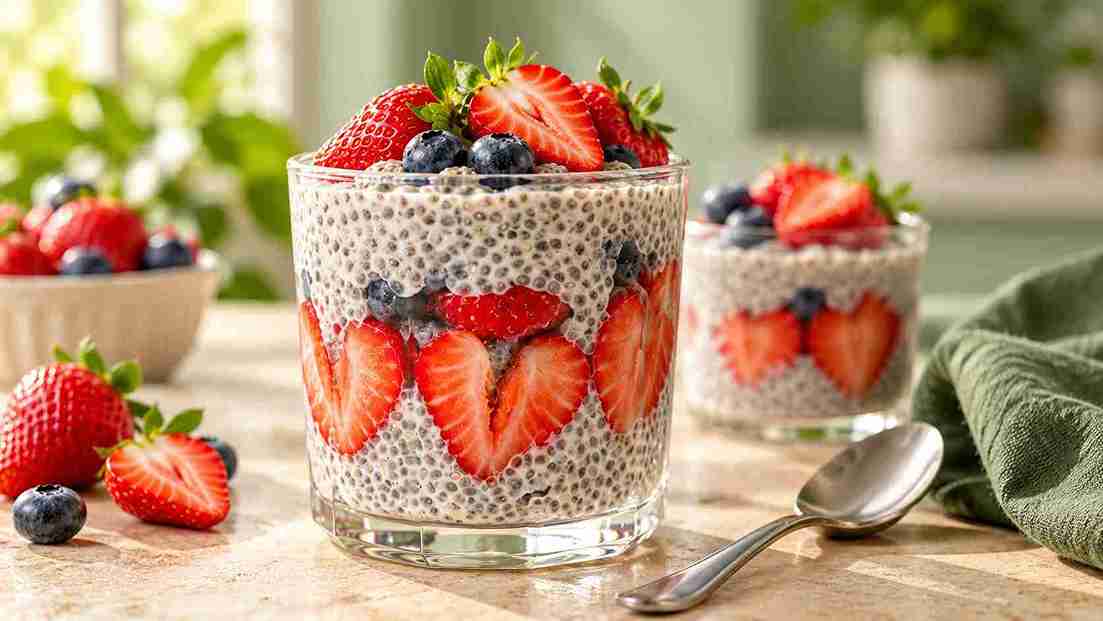
Short answer: To make chia seed pudding, stir ¼ cup of chia seeds into 1 cup of milk with a little maple syrup and vanilla, stir again after 5 minutes, then chill for at least 2 hours or overnight. It takes 5 minutes of hands-on time and makes 2 servings. Topped with raspberries, each serving has about 11 grams of fiber, 8 grams of protein and 207 calories with 2% milk.
Chia seed pudding is one of the easiest make-ahead breakfasts there is. The seeds soak up the milk and swell into a soft, spoonable pudding with a texture a little like tapioca. You mix it the night before, and in the morning it’s ready to eat straight from the fridge, at home or packed in a jar.
This base recipe is lightly sweet and works with dairy or plant milk. Below you’ll find the ingredients, method, swaps, toppings, nutrition per serving and storage tips. For the nutrition of the seeds themselves, see our chia seeds nutrition guide, and for more ideas browse our recipes.
Chia seed pudding at a glance
- Servings
- 2
- Prep time
- 5 minutes, plus at least 2 hours chilling
- Calories
- About 207 per serving (2% milk and raspberries)
- Fiber
- About 11 g per serving
- Protein
- About 8 g per serving
- Diet
- Vegetarian, gluten-free; vegan with plant milk
- Keeps
- Up to 4 days in the fridge
Why this recipe works
- The right ratio: ¼ cup of chia seeds to 1 cup of liquid sets into a pudding that’s thick but still creamy. Less chia gives a runny result; more makes it stiff.
- A second stir: chia seeds clump as they start to gel. Stirring again after about 5 minutes breaks up the clumps so every spoonful has an even texture.
- Fiber without effort: chia seeds are mostly fiber, so a small serving keeps you full for hours. Raspberries add even more.
- Little added sugar: 2 teaspoons of maple syrup across two servings is enough when the fruit topping adds natural sweetness.
Chia Seed Pudding
Ingredients
Method
- In a bowl or lidded jar, stir together the chia seeds, milk, maple syrup, vanilla and cinnamon.
- Leave for 5 minutes, then stir or shake again to break up any clumps.
- Cover and refrigerate for at least 2 hours, or overnight, until thick.
- Stir before serving. Loosen with a splash of milk if too thick, or add a teaspoon more chia and wait 15 minutes if too thin.
- Divide between two bowls and top with raspberries.
Notes
Tip: for a smooth, mousse-like pudding without visible seeds, blend all the ingredients except the fruit for 30 seconds before chilling.
Ingredient notes and swaps
- Milk: 2% milk gives the most protein. Unsweetened almond milk makes a lighter pudding with about 170 calories and 5 g of protein per serving. Soy milk is the best plant option for protein, and canned light coconut milk makes a richer, dessert-style pudding.
- Sweetener: maple syrup, honey and agave all work. Mashed ripe banana or a couple of chopped dates are options if you’d rather skip added sugar.
- More protein: stir in ¼ cup of Greek yogurt before serving, or add a scoop of protein powder with an extra splash of milk. See our guide on how to choose a protein powder.
- Flavors: add 1 tablespoon of cocoa powder for chocolate pudding, ½ cup of mashed mango for a tropical version, or a spoonful of peanut butter and banana slices.
- Toppings: berries, mango, kiwi, pomegranate arils, toasted nuts, pumpkin seeds or a little granola.
- Seeds: black and white chia seeds behave the same way and have the same nutrition.
Nutrition per serving
We calculated the nutrition from USDA data for each ingredient, using 2% milk, 2 teaspoons of maple syrup and 1 cup of raspberries, divided into 2 servings.
| Per serving | With 2% milk | With unsweetened almond milk |
|---|---|---|
| Calories | 207 | 169 |
| Protein | 8.1 g | 4.8 g |
| Carbohydrates | 26 g | 21 g |
| Fat | 9 g | 8.4 g |
| Fiber | 10.9 g | 10.9 g |
| Total sugars | 13 g | 7 g |
| Sodium | 62 mg | 75 mg |
| Calcium | 295 mg | 337 mg |
| Magnesium | 95 mg | 92 mg |
Calculated from USDA FoodData Central values for chia seeds, 2% milk, unsweetened almond milk, maple syrup and raspberries. The sugar in the 2% milk version is mostly natural milk sugar and fruit sugar; added sugar from maple syrup is about 4 g per serving.
With nearly 11 grams of fiber, one serving covers about 40 percent of the daily value. If you don’t usually eat much fiber, start with a half serving and drink plenty of water. Our fiber calculator shows how much you need each day.
How much fiber do you need? Find your daily fiber target and see how this pudding fits in.
Storage and make-ahead
- Fridge: keep chia pudding covered in the fridge for up to 4 days. It thickens as it sits, so stir in a splash of milk before eating.
- Meal prep: make a double or triple batch in individual jars on Sunday for ready-made breakfasts. Add fresh fruit on the day you eat it, so it doesn’t go soggy.
- Freezing: chia pudding can be frozen for up to a month, but the texture becomes slightly grainy. Thaw it overnight in the fridge and stir well.
- Food safety: because it’s made with milk, don’t leave chia pudding out of the fridge for more than 2 hours.
Chia seed pudding FAQ
How long does chia pudding take to set?
It starts to thicken in about 15 minutes and is properly set after 2 hours in the fridge. Overnight gives the best texture.
Why is my chia pudding runny?
Usually there’s too much liquid or it hasn’t chilled long enough. Stir in another teaspoon or two of chia seeds and wait 15 to 30 minutes.
Why is my chia pudding lumpy?
The seeds clumped before they could absorb the liquid. Stir again after the first 5 minutes, or shake it in a jar. Blending also gives a smooth result.
Can I eat chia pudding every day?
Yes, as part of a varied diet. One serving is a good amount; it’s high in fiber, so increase gradually if you’re not used to it.
Can I make chia pudding with water?
You can, but it will taste bland and be lower in protein and calcium. Milk or a fortified plant milk gives a creamier, more nutritious pudding.