
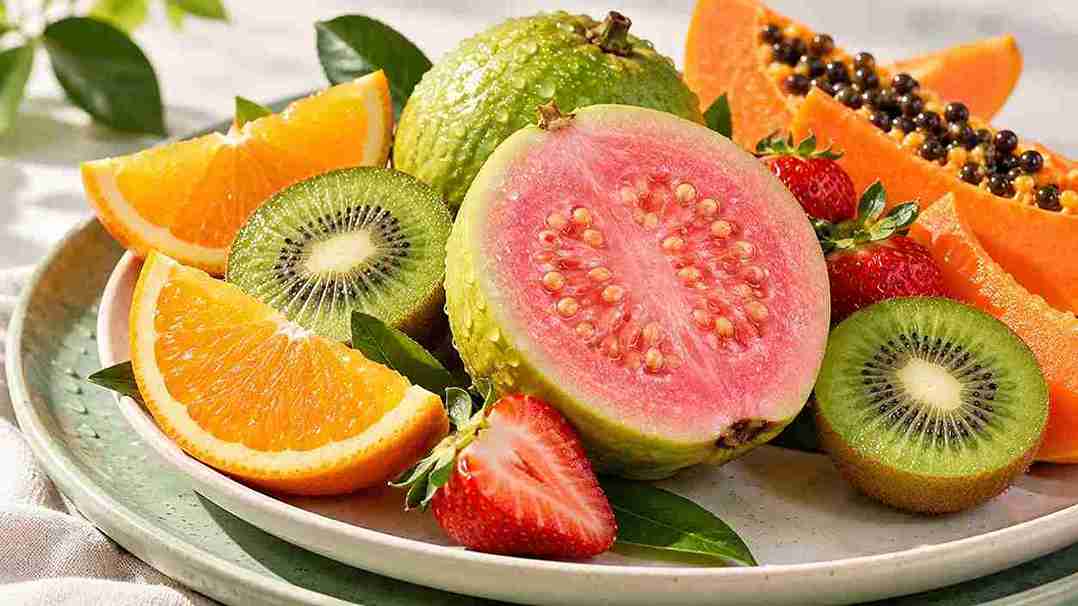
Short answer: Guava, kiwi, strawberries and citrus fruits are useful sources of vitamin C. Compare equal serving sizes, because a per-cup value and a per-fruit value are not interchangeable.
The Top 15 Fruits Rich in Vitamin C: A Nutritional Profile
Vitamin C is an essential nutrient that supports our immune system, promotes healthy skin, and aids in the absorption of iron. Many fruits are rich in Vitamin C, providing a delicious way to meet your daily nutritional needs. Here’s a look at 15 fruits highly packed with Vitamin C, along with their nutritional profiles and recommended serving sizes.
1. Guava
Guava is a tropical fruit loaded with Vitamin C. A single guava can provide over 200% of your daily intake. This sweet and juicy fruit also contains dietary fiber and other essential vitamins.
- Nutrition: 377 mg of Vitamin C per 100g
- Serving Size: 1 medium guava (approx. 250g)
2. Kiwi
The kiwi is a small fruit that packs a big nutritional punch. It contains a high level of Vitamin C, which can help boost your immune system and improve skin health.
- Nutrition: 93 mg of Vitamin C per 100g
- Serving Size: 1 medium kiwi (approx. 70g)
3. Strawberries
Strawberries are not only tasty but also a fantastic source of Vitamin C. They can be enjoyed fresh, in smoothies, or as toppings for various dishes.
- Nutrition: 59 mg of Vitamin C per 100g
- Serving Size: 1 cup sliced (approx. 150g)
4. Oranges
Oranges are widely recognized as a go-to fruit for Vitamin C. With their refreshing taste and juicy texture, they are perfect for snacking.
- Nutrition: 53 mg of Vitamin C per 100g
- Serving Size: 1 medium orange (approx. 130g)
5. Papaya
Papaya is another tropical fruit rich in Vitamin C, as well as other antioxidants. Eating this fruit can support your overall health and well-being.
- Nutrition: 60 mg of Vitamin C per 100g
- Serving Size: 1 cup cubed (approx. 145g)
6. Pineapple
Pineapple is not only delicious but also an excellent source of Vitamin C. It’s often used in fruit salads and tropical smoothies.
- Nutrition: 48 mg of Vitamin C per 100g
- Serving Size: 1 cup, diced (approx. 165g)
7. Mango
Mangoes are loved for their sweet flavor and smooth texture. They are rich in Vitamin C, providing several health benefits.
- Nutrition: 60 mg of Vitamin C per 100g
- Serving Size: 1 medium mango (approx. 200g)
8. Lychee
Lychee is a unique fruit that’s not only high in Vitamin C but also offers a delightful taste. Its exotic flavor makes it a favorite in many desserts.
- Nutrition: 71 mg of Vitamin C per 100g
- Serving Size: 1 cup (approx. 200g)
9. Acerola Cherry
Acerola cherries are incredibly rich in Vitamin C. Just a handful can provide a substantial amount of your daily requirement.
- Nutrition: 1677 mg of Vitamin C per 100g
- Serving Size: 1 cup (approx. 150g)
10. Blackcurrants
Blackcurrants are high in Vitamin C and also contain other beneficial compounds that support heart health.
- Nutrition: 181 mg of Vitamin C per 100g
- Serving Size: 1 cup (approx. 150g)
11. Raspberries
Raspberries are another berry with a good amount of Vitamin C. They are also high in fiber, making them great for digestion.
- Nutrition: 26 mg of Vitamin C per 100g
- Serving Size: 1 cup (approx. 123g)
12. Grapefruit
Grapefruit is known for its tangy flavor and health benefits. It is a refreshing source of Vitamin C that pairs well with breakfast.
- Nutrition: 31 mg of Vitamin C per 100g
- Serving Size: 1 medium grapefruit (approx. 250g)
13. Cantaloupe
Cantaloupe is a hydrating fruit that provides Vitamin C and other essential nutrients. It can be enjoyed fresh or in fruit salads.
- Nutrition: 36 mg of Vitamin C per 100g
- Serving Size: 1 cup (approx. 160g)
14. Passion Fruit
Passion fruit offers a unique flavor along with a significant amount of Vitamin C. It’s perfect for adding to different dishes and beverages.
- Nutrition: 30 mg of Vitamin C per 100g
- Serving Size: 1 medium fruit (approx. 18g)
15. Watermelon
Watermelon is not only refreshing but also contains a decent amount of Vitamin C. It’s great to enjoy during hot summer days.
- Nutrition: 8 mg of Vitamin C per 100g
- Serving Size: 1 cup cubed (approx. 152g)
These fruits into your daily diet can help you meet your Vitamin C requirements while enjoying delicious flavors. Whether you prefer them fresh, in smoothies, or as part of your meals, there’s no shortage of options to choose from!
The Health Benefits of Consuming Vitamin C-Rich Fruits
Eating fruits that are high in vitamin C is not only a delightful experience for your taste buds but also a key component of a healthy diet. Vitamin C, also known as ascorbic acid, plays a crucial role in various body functions, making it essential to include vitamin C-rich fruits in your meals. Here, you’ll find insightful information about the health benefits these fruits offer and the importance of incorporating them into your daily routine.
Boosts Immunity
One of the most recognized benefits of vitamin C is its ability to enhance the immune system. Consuming fruits rich in this vitamin helps your body fight off infections and illnesses. Once you eat these fruits, your body uses vitamin C to produce white blood cells, which are vital for a strong immune response. This means that regular intake of vitamin C-rich fruits may lead to fewer colds and flu.
Enhances Skin Health
Have you ever wondered why vitamin C is often included in skincare products? This nutrient helps produce collagen, a protein that keeps your skin firm and youthful. Eating fruits like oranges and strawberries can enhance your skin’s appearance and contribute to a radiant complexion. In addition to allowing your skin to repair itself, vitamin C can protect against damage from UV rays and environmental pollutants.
Improves Absorption of Iron
Do you struggle with iron deficiency? Vitamin C can come to the rescue! Fruits high in this vitamin help improve your body’s absorption of iron, especially from plant-based sources like beans and spinach. Combine these fruits with your meals to boost iron levels effectively. For example, adding a splash of lemon juice over a spinach salad can enhance the iron absorption significantly.
Supports Heart Health
Your heart deserves the best care, and vitamin C plays a vital role in heart health. Studies show that consuming foods high in vitamin C can reduce the risk of cardiovascular diseases. Fruits such as guavas and kiwis are great choices. They are not only delicious but also help lower blood pressure and cholesterol levels, further promoting a healthy heart.
Acts as an Antioxidant
Vitamin C is a powerful antioxidant that protects your body from damage caused by free radicals. These unstable molecules can lead to oxidative stress, which is linked to various diseases, including cancer. By eating vitamin C-rich fruits like berries and papayas regularly, you can neutralize these free radicals and help maintain your overall health.
Improves Mood and Reduces Stress
Feeling stressed or down? Vitamin C may help lift your spirits! Research suggests that vitamin C plays a role in mood regulation and can reduce feelings of anxiety. Consuming fruits like oranges and mangoes might not only quench your thirst but also provide that uplifting boost you need to tackle the day.
Suggested Fruits High in Vitamin C
- Oranges
- Kiwi
- Strawberries
- Pineapple
- Mango
- Guava
- Papaya
- Blackcurrants
- Grapefruit
- Red bell peppers
- Cantaloupe
- Raspberries
- Jackfruit
- Lemon
- Lime
Daily Recommended Intake
The daily recommended intake of vitamin C varies by age and gender, but for adults, it is approximately 65 to 90 milligrams per day. Fortunately, just one medium orange can provide about 70 milligrams of this essential vitamin. This makes it not only easy but also tasty to meet your daily vitamin C needs through fruit consumption!
A variety of these vitamin C-rich fruits into your diet can be as simple as adding them to your breakfast smoothie, enjoying them as a snack, or mixing them into a refreshing salad. Embracing these fruits will not only improve your health but also elevate your culinary choices.
Remember, the key to a healthier you is a balanced diet filled with vibrant fruits. Start today by including more of these delicious vitamin C-rich options in your meals!
Serving Sizes for Maximum Vitamin C Intake
Vitamin C is an essential nutrient that plays a key role in immune function, collagen synthesis, and overall health. To ensure you are getting sufficient Vitamin C, it’s important to know which fruits are rich in this vitamin and what serving sizes you need to consume. The following fruits are known for their high Vitamin C content along with their suggested serving sizes for maximum intake.
Top Fruits High in Vitamin C
- Guava: One cup of guava (approximately 250 grams) provides about 377 mg of Vitamin C. This tropical fruit is not only delicious but also one of the richest sources of this vitamin.
- Kiwifruit: A medium-sized kiwifruit (about 76 grams) contains around 71 mg of Vitamin C. It’s a perfect snack and packs a tart flavor that many enjoy.
- Strawberries: One cup of sliced strawberries (approximately 152 grams) offers about 89 mg of Vitamin C. Toss them in your morning cereal or blend into smoothies for a tasty treat.
- Oranges: One medium orange (about 131 grams) contains approximately 70 mg of Vitamin C. Known for its refreshing taste, oranges are perfect as a snack or juiced.
- Papaya: One cup of papaya (about 145 grams) provides about 88 mg of Vitamin C. This sweet fruit is great in fruit salads or eaten on its own.
- Bell Peppers: While not a fruit, it’s worth mentioning that one cup of raw, chopped red bell pepper (about 150 grams) gives you around 190 mg of Vitamin C. Add them to your salads for an extra crunch and health boost.
- Pineapple: One cup of pineapple chunks (about 165 grams) contains about 79 mg of Vitamin C. This tropical delight is juicy and can be enjoyed fresh, grilled, or in desserts.
- Mango: One cup of mango (about 165 grams) has around 60 mg of Vitamin C. This sweet fruit can be enjoyed on its own or blended into smoothies.
- Cantaloupe: One cup of cantaloupe (about 177 grams) offers approximately 65 mg of Vitamin C. This juicy melon is a refreshing option, especially in the summer.
- Raspberries: One cup of raspberries (about 123 grams) provides about 32 mg of Vitamin C. They are an excellent addition to various dishes and can be enjoyed in salads, desserts, or as a snack.
- Blackcurrants: One cup of blackcurrants (about 112 grams) can contain about 200 mg of Vitamin C. They offer a distinct tart flavor that works well in jams and desserts.
- Lychee: One cup of lychee (about 196 grams) has around 136 mg of Vitamin C. This sweet and floral fruit makes for an exotic treat.
- Jackfruit: One cup of raw jackfruit (about 150 grams) contains around 68 mg of Vitamin C. It can be used in curries or enjoyed fresh.
- Passion Fruit: One medium passion fruit (about 18 grams) contains around 7 mg of Vitamin C. Though lower in quantity, it’s a great addition to smoothies for flavor and nutrition.
- Gooseberries: One cup of raw gooseberries (around 150 grams) offers about 41 mg of Vitamin C. These tart berries can be eaten fresh, cooked, or made into jams.
How to Incorporate These Fruits
By including a variety of these fruits in your daily diet, you can easily meet your Vitamin C needs. Aim for at least 2 servings from the list per day, whether as snacks, in salads, or as part of your breakfast. A smoothie made with guava, strawberries, and oranges can be a delicious way to blend multiple sources together for maximum health benefits.
It’s also beneficial to consume fruits when they are in season, as they tend to be fresher and have higher nutrient content. Remember, the actual Vitamin C content can vary based on ripeness and how the fruits are stored. The crucial part is to enjoy a rainbow of fruits to maximize not just Vitamin C, but overall health.
These fruits into your meals not only boosts Vitamin C intake but also adds essential vitamins, minerals, and fiber that are vital for maintaining good health. Start adding these fruits to your meals and snacks today to enjoy the benefits of their high Vitamin C content.
How to Incorporate These Fruits into Your Daily Diet
Eating fruits high in vitamin C can greatly enhance your overall health. Not only are they delicious, but they also provide essential nutrients in a fun and fruity way. If you’re looking to boost your intake of these nutritious options, here are some creative ways to incorporate them into your daily diet.
Start Your Day Right
Breakfast is an excellent time to add vitamin C-rich fruits to your meals. Here are some easy methods:
- Smoothies: Blend together fruits like oranges, strawberries, or kiwi. Add spinach or a scoop of yogurt for extra nutrients.
- Oatmeal Toppers: Slice up some fresh berries or add citrus segments to your morning oatmeal. They add flavor and nutrition!
- Fruit Salads: Combine several fruits such as cantaloupe, grapefruit, and pineapple for a refreshing start.
Snack Smart
Instead of reaching for chips or candy, choose snacks that are high in vitamin C. These tasty options can satisfy your cravings and boost your health:
- Snack Packs: Prepare containers with sliced kiwi, oranges, or bell peppers (yes, they are fruits too!).
- Fruit Bars: Choose bars made with real fruit as snacks on-the-go.
- Fruit & Nut Mix: Combine dried fruits like apricots or raisins with nuts for a nutritious snack.
Revamp Your Lunch
Adding fruits high in vitamin C to your lunch can brighten your meal. Consider these ideas:
- Salads: Toss in some mandarin oranges or strawberries to greens for a sweet twist.
- Tacos: Add diced mango or pineapple as a topping for your tacos to give them a tropical twist.
- Sandwiches and Wraps: Use slices of avocado or cucumber complemented by a fruit salsa for added zing.
Enjoy Dinner with a Nutritional Kick
Don’t forget about dinner! Here’s how to add vitamin C-rich fruits:
- Glazes and Sauces: Incorporate citrus juices in your marinades or sauces to enhance flavor.
- Roasted Vegetables: Add pomegranate seeds or sliced peaches when roasting vegetables.
- Fresh Salsas: Create a salsa using tomatoes, peppers, and diced mango for a fresh and zesty side dish.
Sweeten Your Day
Desserts can also feature fruits high in vitamin C. Here are some delightful ideas:
- Fruit Parfaits: Layer yogurt with kiwi and strawberries for a healthy and delicious dessert.
- Frozen Fruit Pops: Blend fruits such as mango or strawberries with coconut water and freeze them in molds.
- Baked Goods: Consider adding citrus zest to your cake or muffin batter for unique flavor.
Stay Hydrated
Don’t overlook hydration! Hydrating beverages can also be a source of vitamin C:
- Infused Water: Add citrus slices, berries, or mint to your water for refreshing flavor.
- Juices: Freshly squeezed orange or grapefruit juice provides a great vitamin C boost.
- Herbal Teas: Consider teas made from hibiscus flowers or rose hips for a vitamin C-rich beverage.
By creatively incorporating fruits high in vitamin C into your meals and snacks, you can enjoy better health while satisfying your taste buds. Remember, the key is variety, so don’t hesitate to experiment with different fruits and preparations. You’ll likely find new favorites while keeping your diet nutritious and delicious!
Comparing Vitamin C Content: Fruits vs. Supplements
Vitamin C plays a crucial role in maintaining your health. It supports your immune system, promotes skin health, and acts as a powerful antioxidant. You might wonder, is it better to get Vitamin C from fruits or supplements? Let’s explore the differences in Vitamin C content, bioavailability, and health benefits of both sources.
Natural Sources of Vitamin C
Fruits are one of the best natural sources of Vitamin C. Eating a variety of fruits not only gives you Vitamin C but also provides other essential nutrients, such as fiber, vitamins, and minerals. Here are some of the top fruits high in Vitamin C:
- Guava: An unusual fruit that’s exceptionally high in Vitamin C, with about 126 mg per 100 grams.
- Kiwi: This small fruit packs a punch with approximately 93 mg of Vitamin C per 100 grams.
- Strawberries: With around 58 mg per 100 grams, strawberries are a delicious way to boost your Vitamin C intake.
- Oranges: Known for their Vitamin C content, they provide about 53 mg per 100 grams.
- Pineapple: This tropical fruit contains about 47 mg per 100 grams.
- Mango: With around 36 mg per 100 grams, mangoes are not only tasty but nutritious.
- Papaya: Offering about 60 mg per 100 grams, papayas are another excellent choice.
- Blackcurrants: With about 181 mg per 100 grams, they exceed many other fruits in Vitamin C content.
- Bell peppers: Though not a fruit in the traditional sense, bell peppers come in high on the list, boasting approximately 80 mg per 100 grams.
Various fruits into your diet not only ensures you get enough Vitamin C but also adds a range of flavors and textures to your meals. Plus, it helps you stay hydrated due to their high water content.
Vitamin C Supplements
Supplements are another option for boosting your Vitamin C intake. They come in various forms, including capsules, powders, and effervescent tablets. While Vitamin C supplements can effectively raise your vitamin levels, they have some differences compared to natural sources.
One significant advantage of supplements is their convenience. If you have a busy lifestyle, taking a pill may be easier than preparing fresh fruits. However, there are some important considerations to keep in mind:
- Granularity of absorption: The bioavailability of Vitamin C from fruits is often higher than that from supplements because fruits contain other compounds that aid in absorption.
- Potential for excess: It’s easier to consume too much Vitamin C from supplements, which can lead to side effects like stomach upset and diarrhea.
- Lack of additional nutrients: Unlike fruits, supplements lack the additional beneficial compounds that whole foods provide, such as fiber and other antioxidants.
Choosing between fruits or supplements can depend on your lifestyle, dietary preferences, or specific nutritional needs. If you already consume a varied and balanced diet rich in fruits and vegetables, you may not need supplements at all. However, if you find that your diet lacks sufficient Vitamin C, a quality supplement could fill that gap.
Which is Better?
When comparing fruits to supplements, fruits generally come out on top. They provide a wealth of nutrients and benefits beyond just Vitamin C. But for those struggling to meet their daily requirements due to dietary restrictions, supplements can serve as a helpful alternative. Always consult with a healthcare professional when considering supplements, especially if you have health concerns or conditions that might affect nutrient absorption.
Ultimately, the best approach is to focus on a healthy, balanced diet that includes a variety of fruits rich in Vitamin C. This way, you not only meet your nutritional needs but also support your overall health and well-being in a more holistic way.
Conclusion
Embracing a diet rich in Vitamin C is not just about the numbers; it’s about improving your overall health and well-being. The top 15 fruits high in Vitamin C, including stellar options like kiwi, strawberries, and oranges, each offer unique nutritional profiles that contribute to your daily intake. By consuming these fruits regularly, you can significantly boost your immune system, enhance skin health, and promote iron absorption, among other benefits.
Understanding serving sizes is crucial for maximizing your Vitamin C consumption. Most fruits can be easily incorporated into your daily meals or snacks. For instance, tossing a handful of berries into your morning yogurt or enjoying a citrus fruit as a refreshing afternoon snack can provide a delicious way to meet your nutritional goals.
Moreover, while Vitamin C supplements can be useful, they don’t quite match the completeness of nutrients found in whole fruits. The synergy of vitamins, minerals, and fiber in fruits enhances their beneficial effects, making them a superior choice for increasing Vitamin C intake.
Finding creative ways to include these fruits in your diet can turn healthy eating into an enjoyable experience. Smoothies, salads, or simply fresh fruit platters can make consuming Vitamin C-rich fruits a delightful addition to your meal routine.
Ultimately, prioritizing these fruits not only elevates your health but also introduces a burst of flavor and variety into your diet. By making small adjustments and prioritizing natural sources of Vitamin C, you’re taking significant steps towards a healthier lifestyle.
Nutrition amounts are approximate. Variety, portion weight, cooking and brand can change the values. Compare the stated serving and use a product label or a food composition database for precise calculations.