
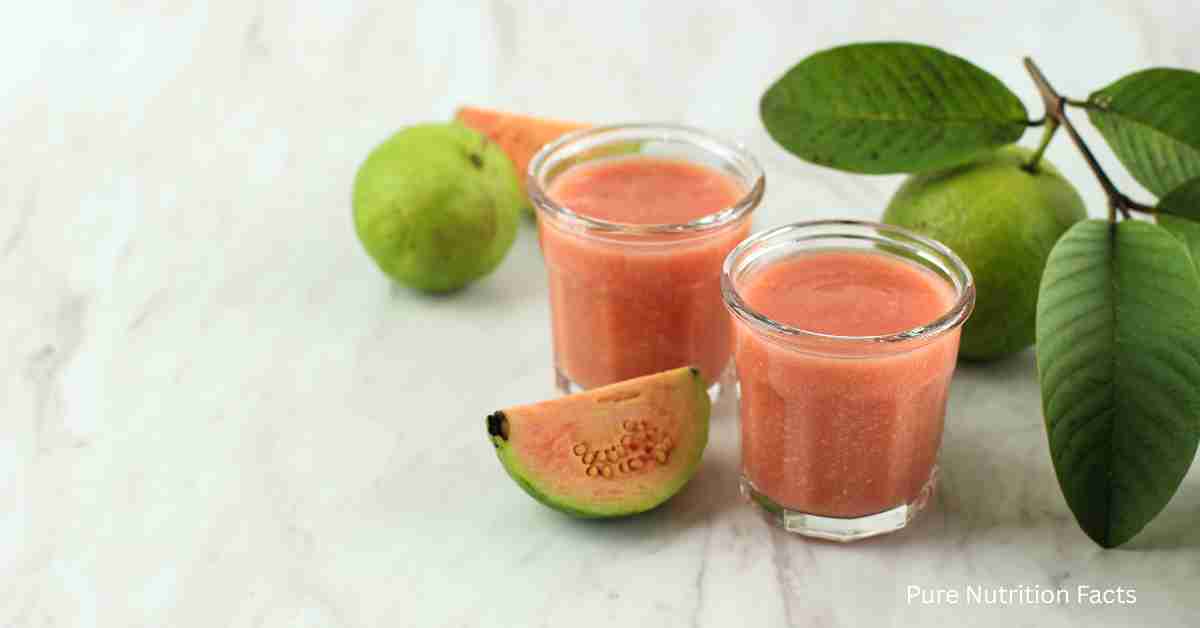
Short answer: To make guava juice, blend about 400 grams of ripe guavas (skin on, ends trimmed) with 1½ cups of cold water, strain out the seeds, then stir in another 1½ cups of water, 2 tablespoons of sugar and 2 tablespoons of lime juice. It takes 10 minutes and makes 4 glasses. Each glass has about 94 calories and 231 mg of vitamin C, more than two and a half times the daily value.
Guava is one of the richest sources of vitamin C you can buy, with more than twice as much as an orange gram for gram. Fresh guava juice captures that in a drink that’s fragrant, tropical and naturally thick, a bit like a cross between strawberry and pear. Homemade juice lets you control the sugar, unlike bottled guava nectar, which is often more sugar than fruit.
For more on the fruit, see our guava nutrition guide and our comparison of guava vs orange, or browse our other recipes.
Guava juice at a glance
- Servings
- 4 glasses (about 1 cup each)
- Time
- 10 minutes
- Calories
- About 94 per glass
- Vitamin C
- About 231 mg per glass (256% DV)
- Added sugar
- About 6 g per glass; optional
- Diet
- Vegan, gluten-free, dairy-free
- Keeps
- 2 days in the fridge
How to choose guavas for juice
Ripe guavas are the key to good juice. Look for fruit that has turned from bright green to yellow-green or pale yellow, gives slightly when pressed, and smells sweet and musky at the stem end. Hard, dark green guavas are unripe and will make sour, astringent juice; leave them on the counter for a few days to ripen.
- Pink guavas give a beautiful coral-colored juice with a sweet, berry-like flavor. They’re also a source of lycopene.
- White guavas are slightly more tart and make a pale, cloudy juice. Both work well.
- Frozen guava pulp, sold in Latin American grocery stores, is a convenient alternative. Use about 14 ounces of thawed pulp and check the label for added sugar.
Guavas are sold in many US supermarkets in fall and winter, and in Latin American and Asian markets most of the year.
Why this recipe works
- No peeling needed: guava skin is thin and edible and blends smoothly, so you keep its nutrients and save time.
- Blending with less water first: a thicker purée blends more smoothly and is easier to strain.
- Straining the seeds: guava seeds are hard, and blending them leaves a gritty texture. A fine sieve removes them while keeping most of the pulp.
- Lime and salt: a squeeze of lime brightens the flavor, and a pinch of salt makes the fruit taste sweeter, so you need less sugar.
Fresh Guava Juice
Ingredients
Method
- Wash the guavas and trim off the stem and blossom ends. Cut each one into quarters; there is no need to peel them.
- Add the guavas and 1½ cups of the cold water to a blender and blend on high for about 1 minute, until completely smooth.
- Pour the mixture through a fine-mesh sieve set over a pitcher, pressing the pulp with a spoon to push through as much juice as you can. Discard the seeds left in the sieve.
- Stir in the remaining 1½ cups of water, the sugar, lime juice and salt until the sugar dissolves.
- Taste and adjust with more water, sugar or lime. Serve over ice.
Notes
Variations
- No added sugar: very ripe pink guavas are often sweet enough on their own. Skip the sugar to bring each glass down to about 70 calories.
- Guava agua fresca: add 1 extra cup of water and plenty of ice for a lighter, more refreshing drink.
- Guava-pineapple: replace 1 cup of the water with pineapple juice, or blend in a cup of fresh pineapple.
- Guava-ginger: blend a 1-inch piece of peeled fresh ginger with the guavas.
- Sparkling guava: make the juice with half the water, then top each glass with chilled sparkling water.
- Smoothie: skip the straining, use less water, and blend with yogurt and a frozen banana. Our dragon fruit smoothie bowl uses a similar method.
Nutrition per glass
We calculated the nutrition from USDA FoodData Central values for raw common guava, sugar and lime juice, divided into 4 glasses. Values are for the blended fruit before straining; straining removes the seeds and some fiber, so the fiber in your glass will be lower.
| Per glass (about 1 cup) | Amount | % Daily Value |
|---|---|---|
| Calories | 94 | – |
| Carbohydrates | 21.2 g | 8% |
| Total sugars | 15.3 g | – |
| Added sugars | 6.3 g | 13% |
| Fiber (before straining) | Up to 5.4 g | Up to 19% |
| Protein | 2.6 g | 5% |
| Vitamin C | 231 mg | 256% |
| Folate (DFE) | 50 mcg | 12% |
| Potassium | 426 mg | 9% |
Calculated from USDA FoodData Central: guavas, common, raw (FDC 173044); sugars, granulated (169655); lime juice, raw (168156). Daily Values per the FDA label.
One glass provides well over a full day’s vitamin C. Your body can only absorb and use so much at once, so there’s no benefit to drinking more than a glass a day for vitamin C alone. Vitamin C helps your body absorb iron from plant foods, which makes a glass of guava juice a good partner for a bean, lentil or fortified-cereal meal. See our vitamin C guide and our list of fruits high in vitamin C for more.
Guava juice vs whole guava
Whole guava is the better everyday choice. It’s more filling, contains all its fiber, and takes longer to eat, so it’s harder to overdo. Juice concentrates several fruits into one glass, and straining removes some of the fiber that slows the absorption of sugar. Our guide to juicing vs eating whole fruit explains the trade-offs in more detail.
Homemade guava juice is still a far better option than most bottled guava nectars, which are often around 25 to 35 percent fruit, with added sugar making up much of the rest. If you have diabetes, keep to a small glass with a meal, or eat the whole fruit instead. For other homemade drinks, try our calamansi juice or agua de jamaica.
Storage
- Fridge: store in a covered pitcher or jar for up to 2 days. Vitamin C slowly breaks down once the fruit is cut, so it’s best fresh.
- Separation: the pulp settles over time. Stir or shake well before serving.
- Freezer: freeze the unsweetened purée in ice cube trays for up to 3 months and blend the cubes with water when needed.
- Whole guavas: ripen at room temperature, then refrigerate for up to 4 days.
Guava juice FAQ
Do you peel guava before making juice?
No. The skin is edible and blends smoothly. Just wash the fruit and trim the stem and blossom ends.
Can you blend guava seeds?
You can, and they’re edible, but they make the juice gritty and can be hard on blender blades. Straining them out gives a smoother drink.
Is guava juice good for you?
Yes, in moderation. It’s very high in vitamin C and provides potassium and folate. Keep the added sugar low and stick to about one glass a day.
Why is my guava juice bitter or sour?
The guavas were probably underripe. Use fruit that’s yellow-green, slightly soft and fragrant, and add a little more sugar or a ripe banana to balance it.